
I Spent Months on OpenClaw. Then Anthropic Made It Irrelevant Overnight.
Claude Code Channels just launched. Here's why it matters, what it replaces, and how to set up the whole stack from scratch — no terminal required.

![[HERO] Claude Just Shipped One Update That Makes OpenClaw Almost Irrelevant](https://substackcdn.com/image/fetch/$s_!dzso!,f_auto,q_auto:good,fl_progressive:steep/https%3A%2F%2Fsubstack-post-media.s3.amazonaws.com%2Fpublic%2Fimages%2F6c8b740d-74be-419a-87b6-85ddbe59ef3f_1536x1024.webp "[HERO] Claude Just Shipped One Update That Makes OpenClaw Almost Irrelevant")
Four months ago, OpenClaw went viral and Mac Minis sold out across Asia.
People were buying dedicated hardware -- $500, $800, some spending over a thousand -- to run an open-source AI agent that could text them on Telegram, manage their files, and execute tasks while they slept. It was the first time most people saw what an always-on AI assistant actually looked like in practice, and the reaction was electric.
I was one of those people. I spent months wrestling with OpenClaw. Setting it up, breaking it, fixing it, discovering tools like Paperclip, finding new ways to push what it could do. It was genuinely fun -- the kind of tinkering that reminds you why you got into technology in the first place. If you followed along with my Day 0 playbook for mastering OpenClaw or my guide to running it on frontier models, you know exactly how much effort that took.
Then yesterday, Anthropic dropped a single update to Claude Code called Channels. And with it, they made about 90% of that setup unnecessary for 99% of people.
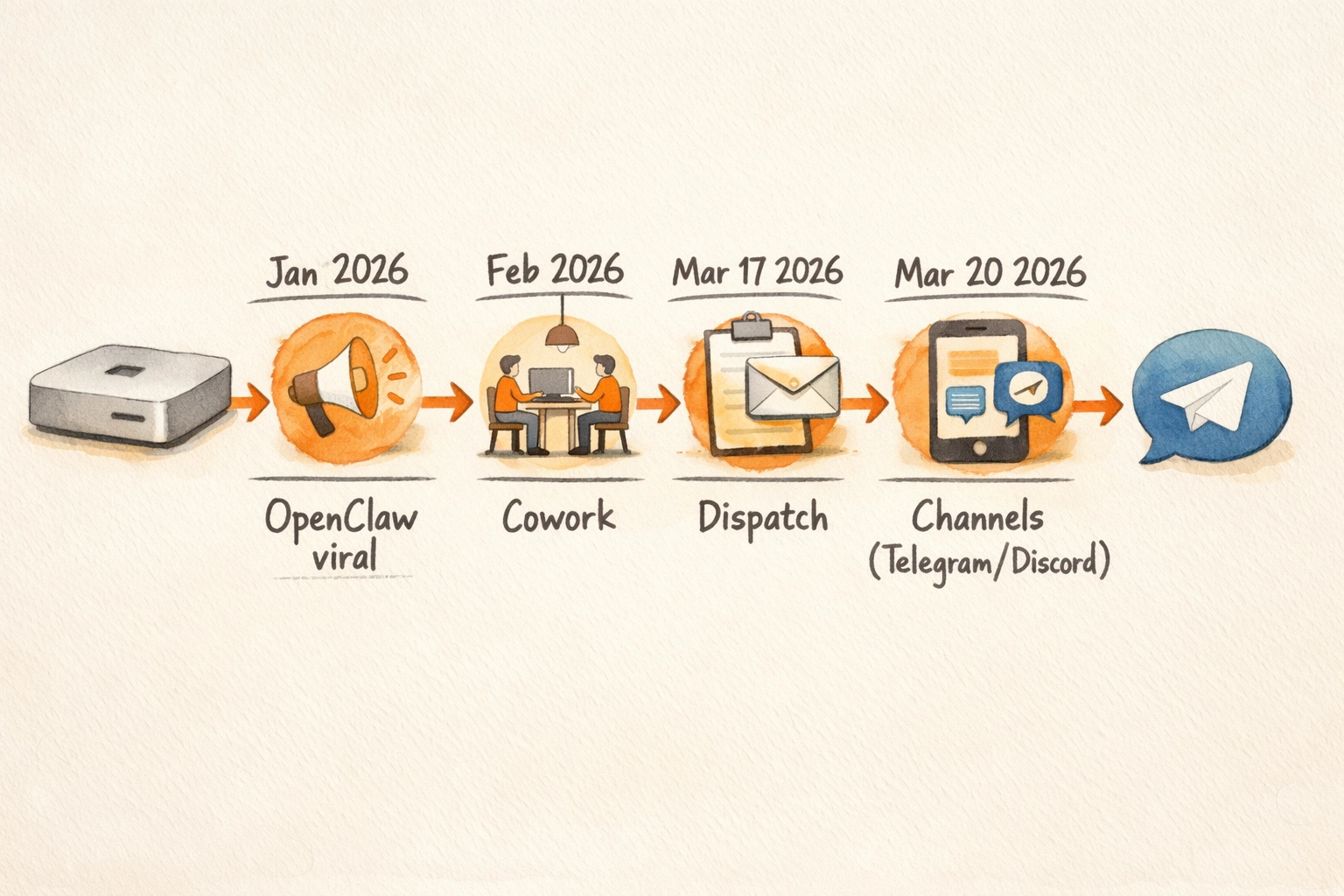
Here's what happened in less than four months:
Early January: OpenClaw (then called Clawdbot) goes viral. Mac Minis sell out. The message is clear: people want an AI agent they can talk to from their phone that does real work on a real computer.
January 12: Anthropic quietly launches Cowork as a research preview -- a desktop sandbox where Claude can execute tasks, manage files, and work alongside you.
Late January: Anthropic sends trademark complaints. The project gets renamed to OpenClaw. The hype intensifies.
February 14: OpenClaw's creator announces he's joining OpenAI. The project moves to an open-source foundation.
February 24: Anthropic updates Cowork, CNBC covers it as a productivity tool for regular office workers -- not just developers.
March 17: Dispatch launches. Now you can control your Cowork session from your phone via the Claude mobile app. This is Anthropic's direct answer to "I want to text my AI agent from anywhere."
March 20: Claude Code Channels drops. Telegram and Discord integration. You message Claude through a chat app, it does the work on your machine, and replies back in the same conversation. VentureBeat calls it "an OpenClaw killer."
This is the pattern that matters.
OpenClaw did something incredible. It showed the world what was possible. It validated a market that most people didn't know existed. It got non-technical people excited about AI agents -- not as a concept, but as something you could actually use.
And then the company with the resources, the security infrastructure, and the enterprise trust walked in and built a safer, easier version. This isn't a criticism. This is how technology works. It's how the internet worked. It's how mobile worked. Open source builds the market, incumbents absorb the value, and the open-source project evolves into something new.
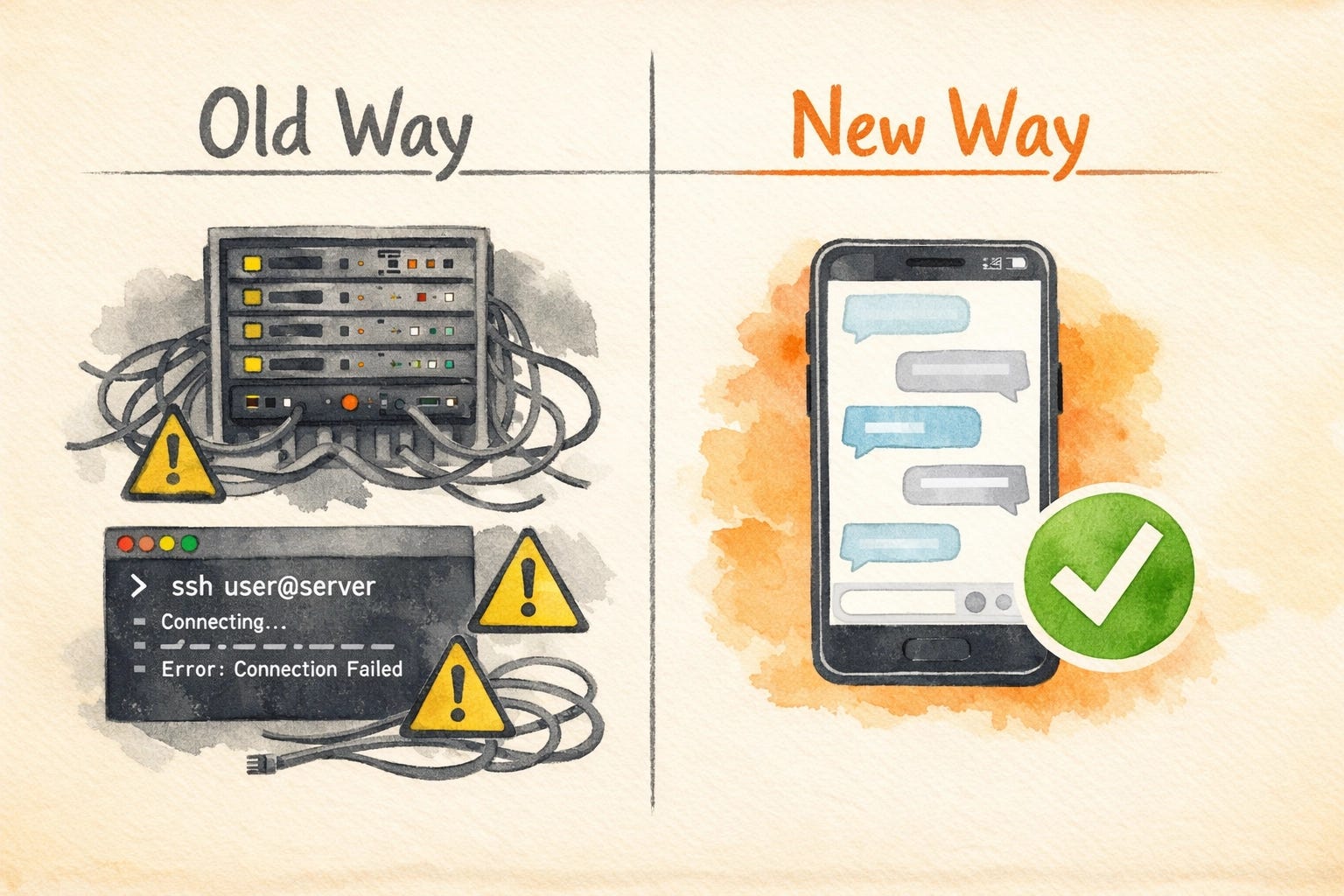
But here's what nobody's saying about why this moment is different:
The people who benefit first aren't big companies. Enterprise is still figuring out how to get AI tools through their security reviews and compliance checks. The people who benefit first are you -- the solopreneur, the small business owner, the freelancer who has ideas but never had the infrastructure to act on them instantly.
I'm living proof. This Substack didn't exist six months ago. Not because I didn't have things to say -- I've been building businesses for 20 years. It didn't exist because I didn't have the time. Now I have automated agents handling research, task management, and the mechanical parts of publishing. That freed up hours every week. Hours I now spend thinking and writing.
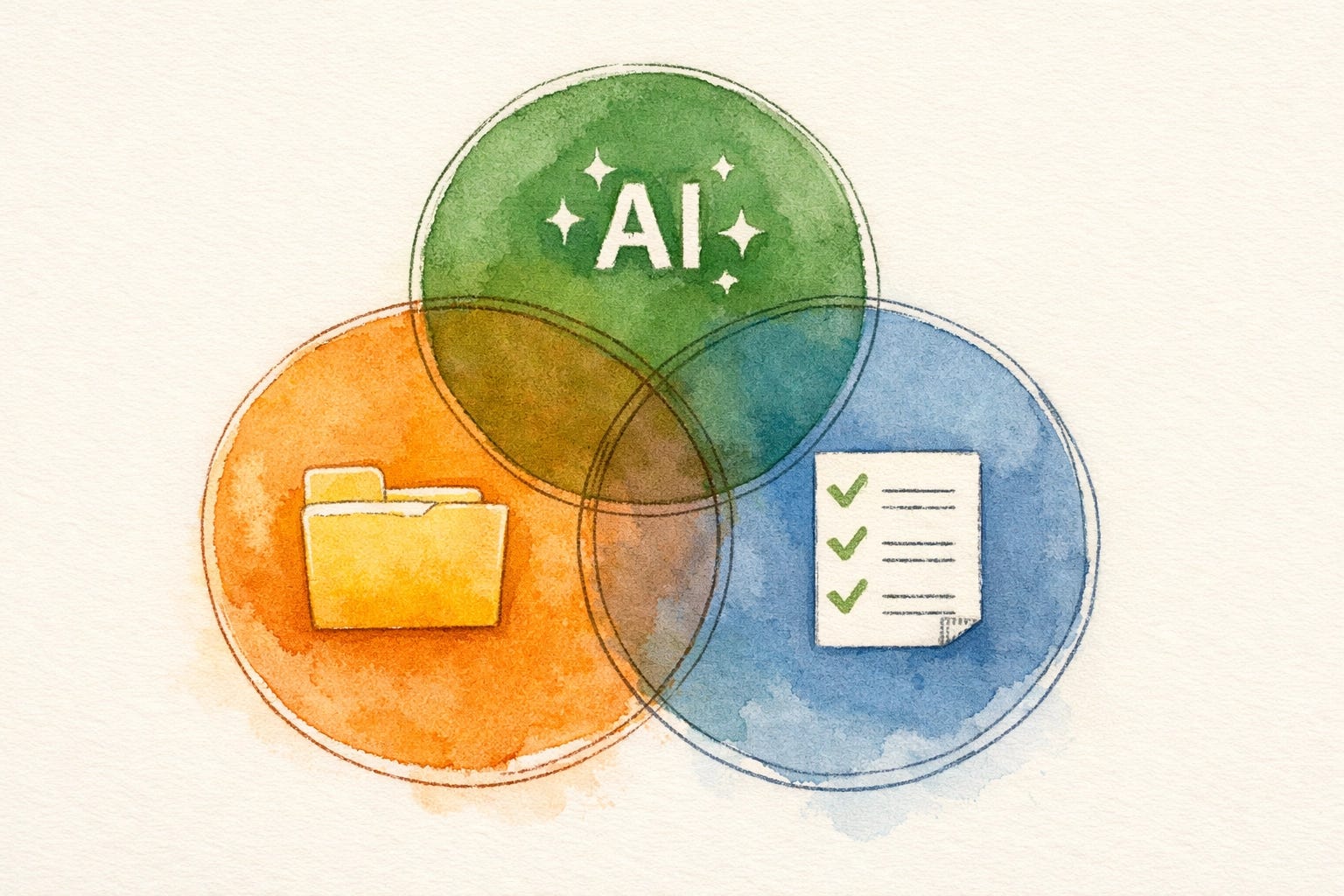
That's not a SaaS replacement story. That's a time reclamation story. And it's the one that matters. I wrote about this shift in depth in how small businesses can 10x productivity -- and Channels just made the entry point even lower.
The stack that changed everything:
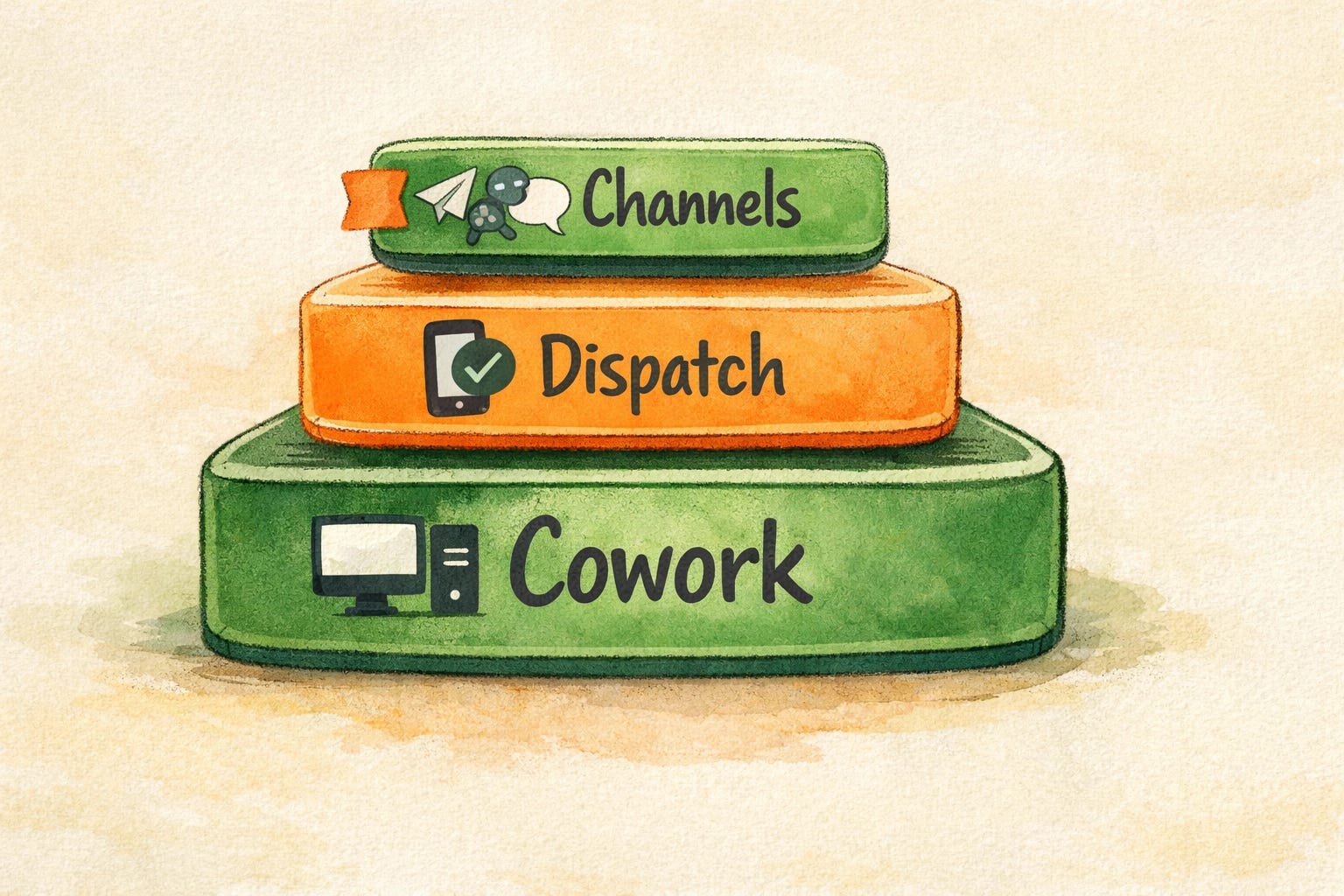
To understand why this is a category-shifter, look at the three layers Anthropic has quietly assembled:
Cowork (The Brain & Hands): The sandbox. Unlike a standard LLM that just talks, Cowork can do. It accesses your local file system, runs terminal commands, and edits code. It's the engine room.
Dispatch (The Remote Control): The missing link, released earlier this week. It allows the Claude mobile app to handshake with your running Cowork session. I can be at a coffee shop, realize I forgot to generate a summary, and trigger it on my home computer from my phone.
Channels (The Interface): The final blow to the DIY agent movement. By integrating directly with Telegram and Discord, Anthropic removed the need for third-party bridge software. Your agent is now just another contact in your phone.
What about OpenClaw?
I'm not abandoning it. I still run an OpenClaw instance that costs me less than $20 a month and does my bidding as needed. As I wrote in OpenClaw isn't magic, there's a certain power in owning the raw infrastructure.
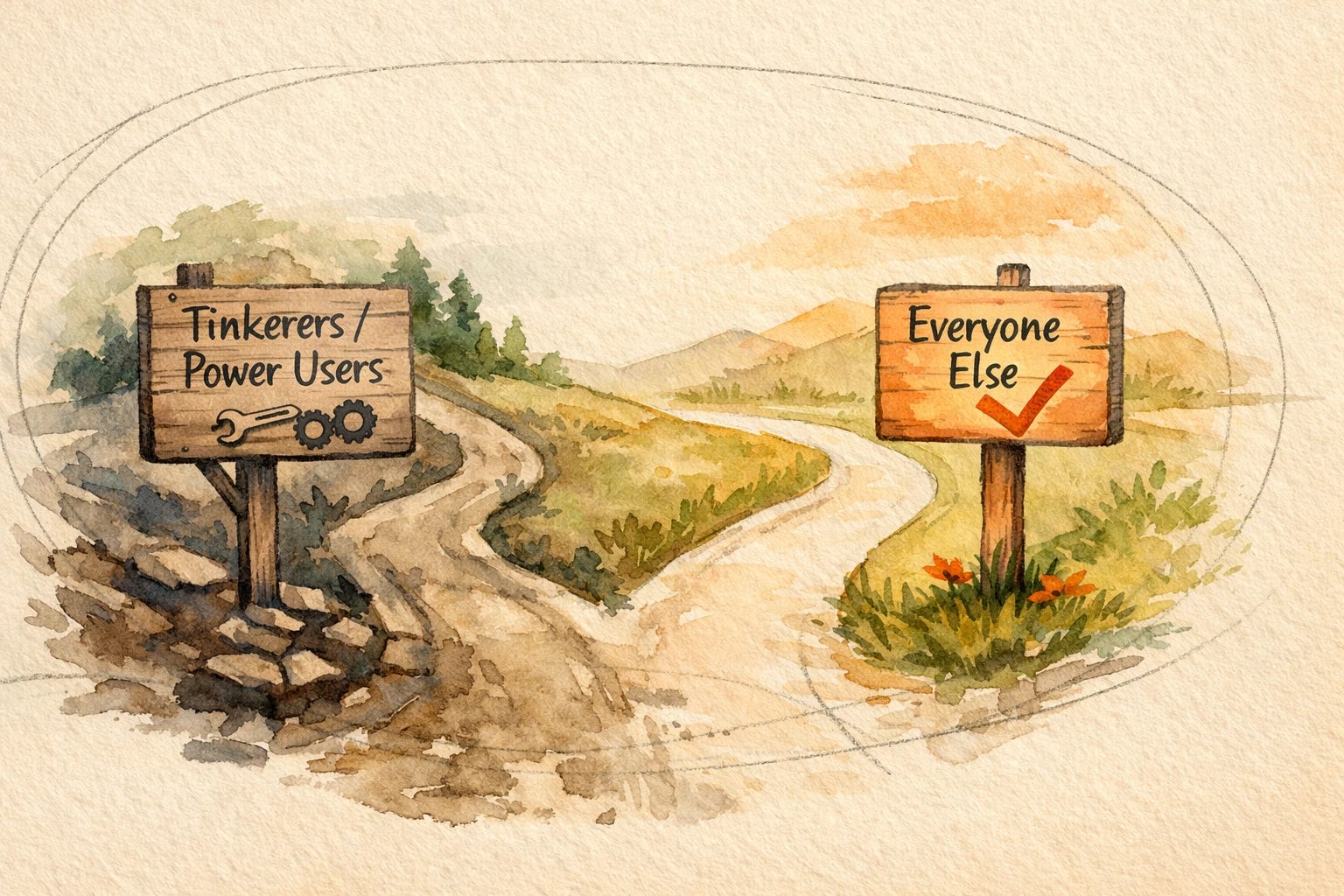
OpenClaw still supports platforms Channels doesn't -- WhatsApp, iMessage, Slack, Signal, Microsoft Teams. Channels only has Telegram and Discord right now. If your business runs on Slack, you're still in the DIY camp for a few more months.
But more importantly, I think OpenClaw's future is as the open-source testing ground. New tools, new integrations, new patterns get prototyped in OpenClaw's ecosystem before the major companies adopt them. That's a real moat -- not in features, but in speed of experimentation. It's the Wild West where we figure out how to give AI a memory before the polished enterprise versions arrive.
My prediction:
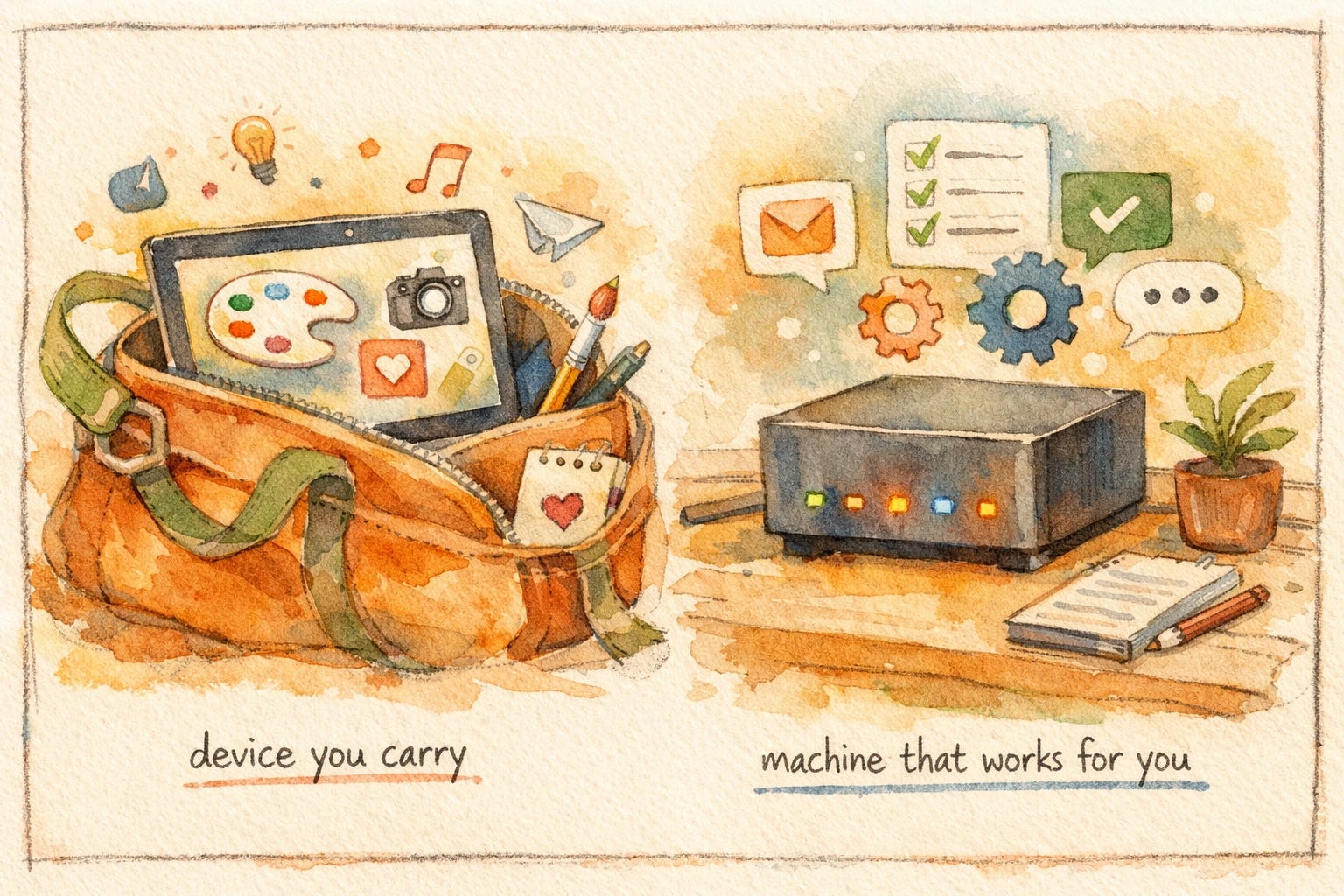
We're going to see a quiet return to the "desktop computer" -- but not the way you remember it. Your laptop is where you work. But your agent needs an always-on machine. Right now, that's a Mac Mini under your desk or a VPS in the cloud. Tools like Jump Desktop bridge the gap for people who aren't comfortable in a terminal.
But eventually? I think we'll see Apple or Microsoft launch a cloud computer OS. A virtual Mac or Windows instance that runs 24/7 as your personal agent server. The "personal computer" gets redefined -- it's not the device in your bag, it's the machine your AI runs on.
Until then, the stack that gets most people started is Cowork + Dispatch + Channels. No command line. No VPS. No $500 hardware purchase. Just a Claude subscription and a Telegram account.
The barrier of entry didn't lower. It evaporated.
We are moving away from the era of "Specification" -- which I covered in Part 3 of my AI Skills series -- and into the era of Delegation. The question isn't whether AI can do the work. It's whether you'll let it.
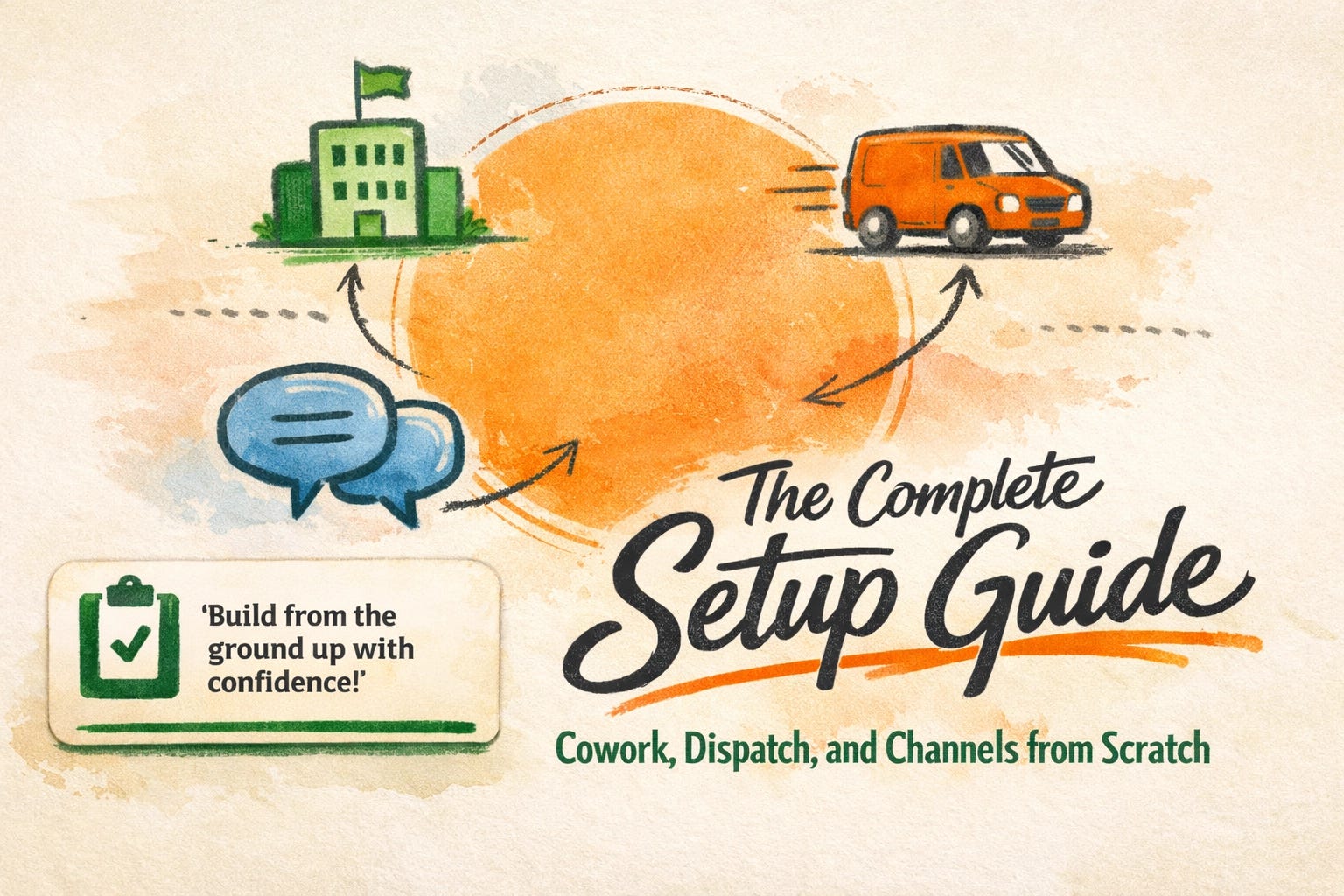
The Complete Setup Guide -- Cowork, Dispatch, and Channels from Scratch
If you've been watching this from the sidelines, here's how to get the full stack running. I'm assuming you have zero setup today -- no Claude Code, no developer tools, no command line experience. By the end of this guide, you'll have an AI agent you can message from your phone that works on your files on your computer.
Step 1: Get Claude
You need a Claude Pro or Max subscription. Go to claude.ai and sign up if you haven't already. Max gives you the most headroom for heavy tasks, but Pro works fine for most people.
Download the Claude desktop app for your Mac (Windows support is coming but isn't here yet for Cowork).
